Vascular disorders involve any condition that affects your circulatory system outside of the heart and brain. When the arteries (bringing oxygen-rich blood) or veins (returning deoxygenated blood) in your limbs or abdomen become blocked, weakened, or damaged, it can lead to severe organ damage or limb loss.
Here is a comprehensive breakdown of five vascular conditions that require immediate evaluation by a vascular surgeon.
Varicose veins are dilated, tortuous, and superficial veins that typically appear blue or purple on the lower extremities. They are caused by venous insufficiency.
Healthy veins contain one-way valves that push blood upward against gravity. When these valves weaken, blood flows backward and pools in the lower legs—a condition known as venous reflux. This increased pressure causes the veins to stretch and bulge.
Complications & Advanced Care Untreated venous insufficiency leads to Lipodermatosclerosis (thick skin) and chronic venous ulcers. For patients seeking advanced varicose veins treatment in lucknow, modern endovascular techniques like Laser Ablation (EVLT) and Glue therapy offer a permanent, painless solution without large incisions.
Deep Vein Thrombosis is the formation of a solid blood clot (thrombus) within the deep venous system, most frequently in the thigh or calf.
DVT rarely presents in both legs simultaneously. Symptoms are usually acute and unilateral:
DVT is an immediate medical emergency. If the thrombus dislodges, it travels to the lungs, causing a fatal Pulmonary Embolism (PE). Accessing rapid deep vein thrombosis treatment in lucknow is critical; vascular specialists utilize advanced blood thinners and catheter-directed thrombolysis to dissolve the clot and prevent fatal complications.
Gangrene is the death of body tissue resulting from a critical loss of arterial blood supply (ischemia) or severe bacterial infection. It most commonly affects the toes, feet, or fingers.
Tissue death usually stems from advanced Peripheral Artery Disease (PAD) or severe Diabetic Neuropathy and Angiopathy. When cholesterol plaque completely occludes an artery, the downstream tissue is starved of oxygen and nutrients.
Gangrene requires immediate revascularization. Leading vascular surgeon in Lucknow, Dr. Ashutosh Kumar Pandey utilize endovascular techniques (balloon angioplasty, atherectomy) or open surgical bypass to restore arterial flow. Delaying treatment inevitably leads to limb amputation to prevent systemic sepsis.
For patients with End-Stage Renal Disease (ESRD), an Arteriovenous (AV) Fistula is surgically created by connecting a native artery directly to a vein in the arm. This provides a high-flow access point required for the hemodialysis machine.
The high-pressure arterial blood forces the vein to dilate and its walls to thicken (maturation). This allows the vein to withstand repeated needle insertions and high filtration speeds. It is the “gold standard” for dialysis access due to lower infection rates compared to catheters.
A vascular surgeon must intervene quickly when a fistula fails. Using minimally invasive endovascular procedures, they can dilate narrowed segments or extract clots to salvage the access site, preventing the need to surgically create a new one.
The aorta is the primary artery originating from the heart, supplying blood to the abdomen, pelvis, and legs.
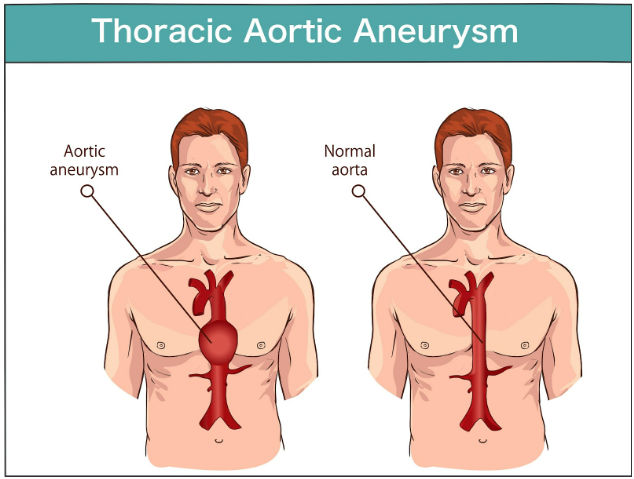
Aortic Aneurysm (The Ballooning Artery) An aneurysm occurs when the arterial wall weakens, causing
the aorta to bulge outward like a balloon. As it expands, the wall becomes thinner. A ruptured abdominal
aortic aneurysm (AAA) causes massive internal hemorrhaging and carries a high mortality rate.
Aortic Occlusion (The Blocked Artery) Conversely, Aortoiliac Occlusive Disease occurs when the lower portion of the aorta becomes severely narrowed or completely blocked by atherosclerotic plaque. This cuts off arterial circulation to both legs, causing severe pain, erectile dysfunction, and tissue loss.
Silent Progression Both conditions often develop asymptomatically and are frequently discovered incidentally during ultrasound imaging. Routine screening is critical for high-risk individuals (smokers, men over 65, and those with a family history).
Vascular diseases develop progressively. The primary risk factors that accelerate blood vessel damage include:
Vascular diseases progress rapidly if left unmonitored. Accurate diagnosis and timely intervention are crucial for preserving limb function and preventing fatal cardiovascular events.