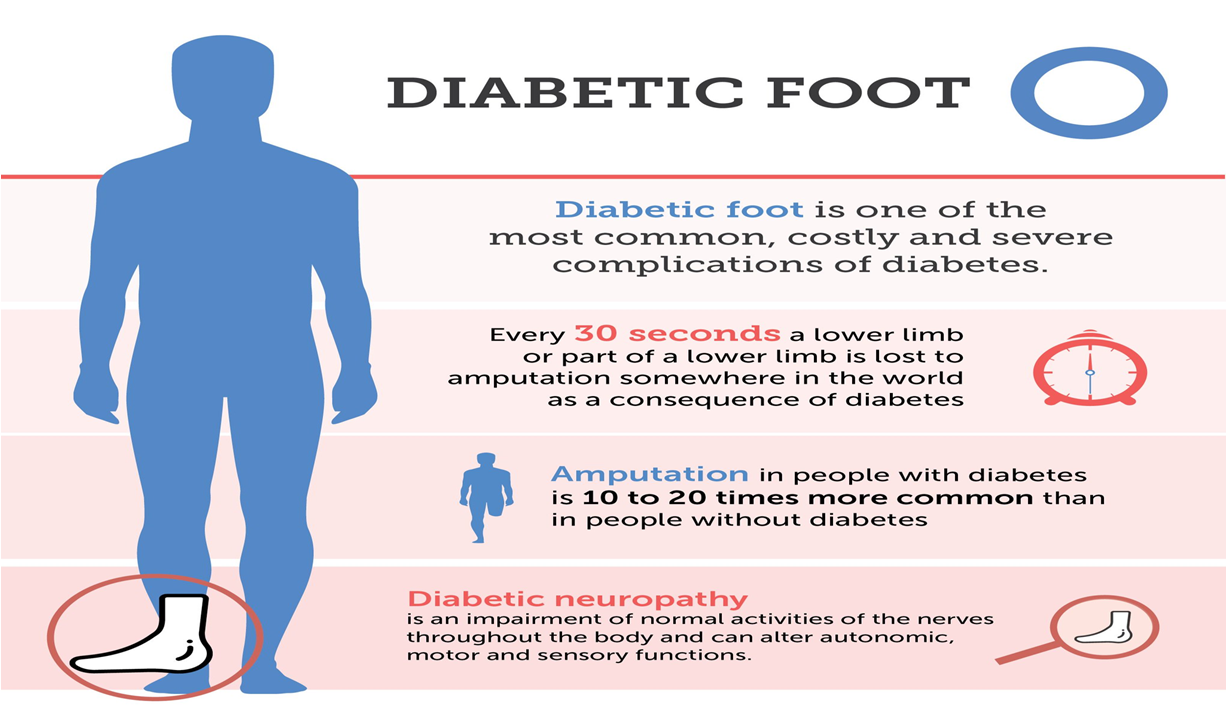
Diabetic Foot

Magnitude Of The Problem In India

Diabetic population 30 million
Foot complications in diabetic patients 40%
Compromised blood circulation 6%–16%
Neuropathy 30%–50%

15% of Diabetics would develop foot ulcer in their life time.
Diabetic Foot

Groups at the highest risk for developing diabetic foot problems

  • Uncontrolled Diabetes
  • Neglected foot care
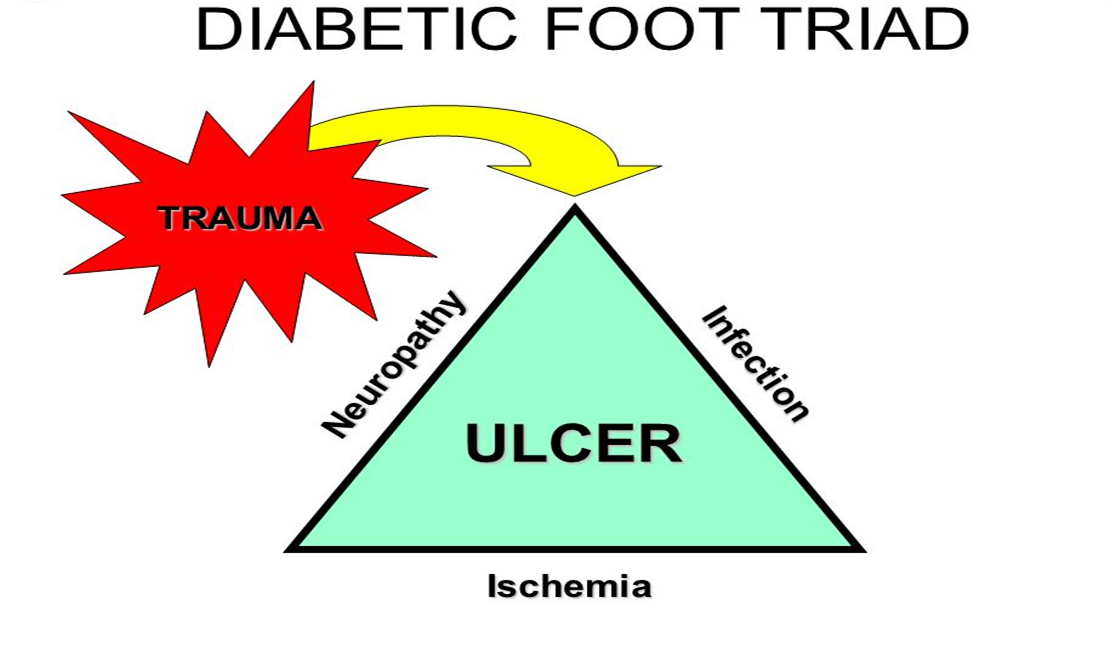
  • Associated Neuropathy
  • Associated Peripheral Arterial Disease/smoking

Warning signs

Consult your doctor immediately if you see any of the following alarming signs on your feet:
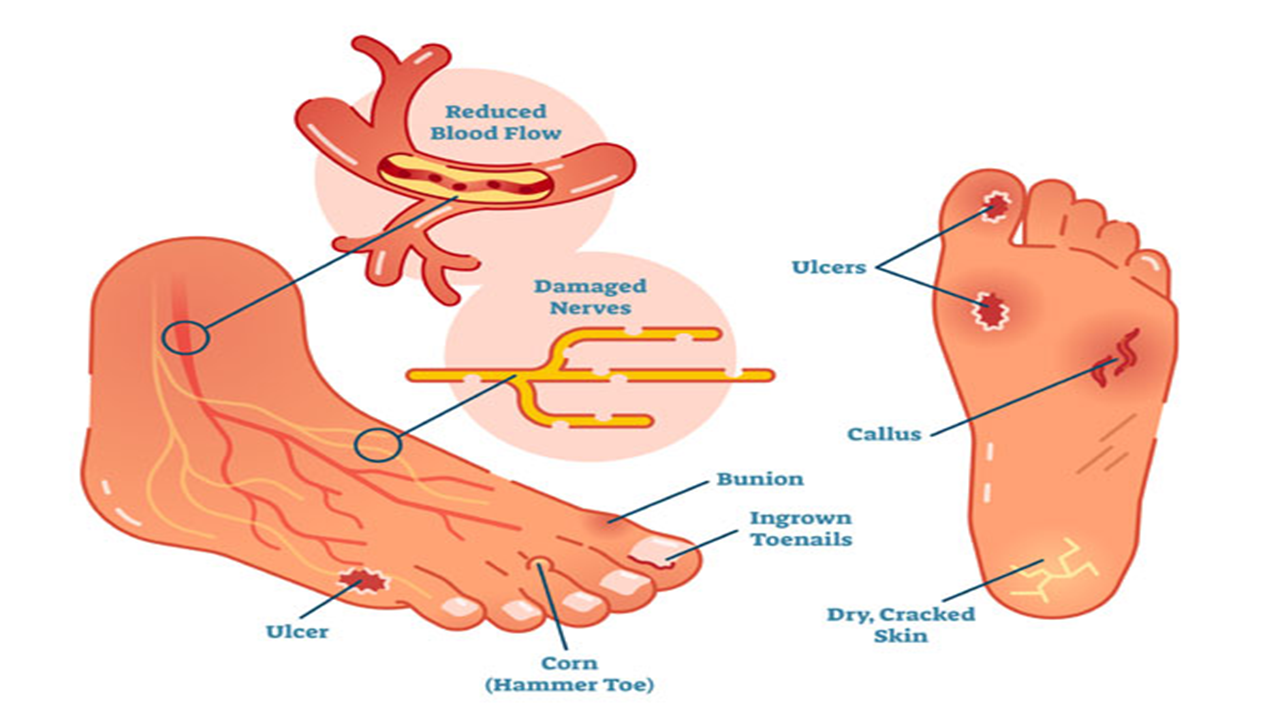
  • Wound/ulcer development
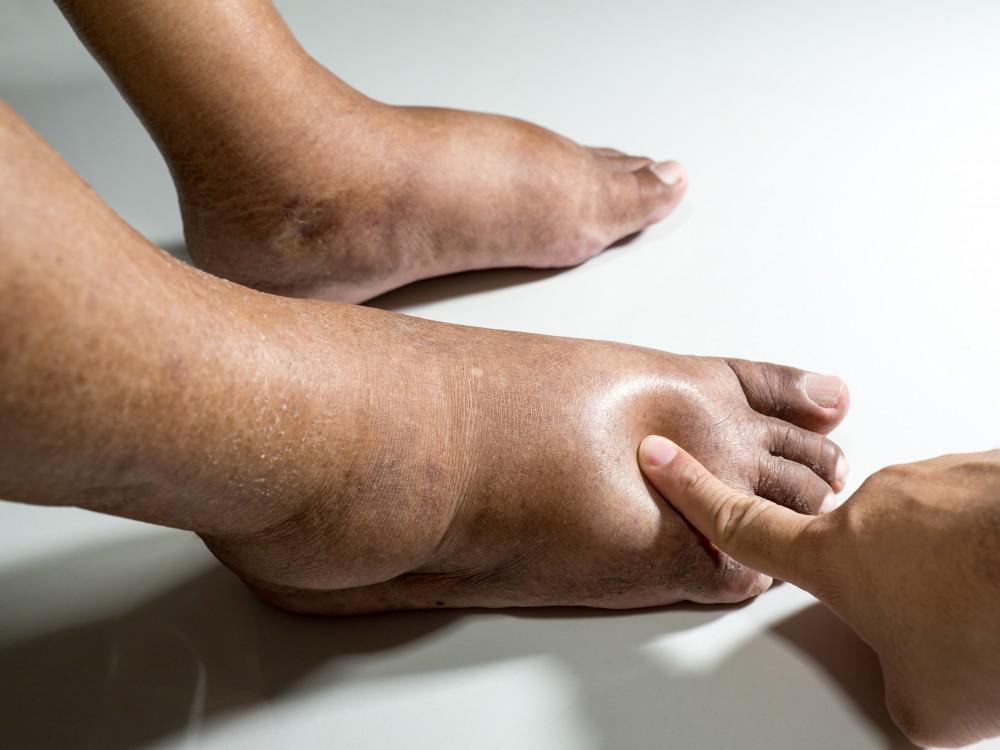
  • Abnormal swelling
  • Redness/localized pain
  • Blister development
  • Cuts/injury/broken skin on toes/heel
  • Callus/corn development
  • Nail or toes color changes(blue/black)
  • Burning pains in legs/feet, worsening at night.
  • Sharp leg cramps after walking some distance
  • Feet feeling cold
  • Tingling, pins and needles sensation, numbness in the feet (neurologic symptoms)
  • Slippage of ‘chappals’ from feet while walking (neurologic symptoms)
Diabetic Foot

Treatment

How can a vascular surgeon help?

Wound cleaning procedure and antibiotics
Complete non-weight bearing of the involved extremity (special footwear)
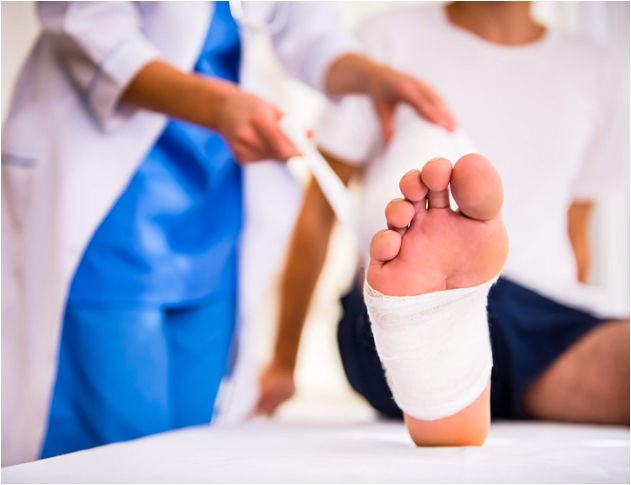
Dedicated diabetic foot wound dressing/ vacuum-assisted closure (VAC) dressing
Teaching foot care to patients
Revascularization or re-establishment of blood flow to the feet for non-healing wounds when needed.

To Maximize foot blood circulation for wound healing Treatment options:

Balloon angioplasty
Vascular stenting
Bypass surgery

Summary

Limb ischemia affects a large number of Indian diabetic patients
A revascularization procedure can save your leg! Functional limb salvage should be attempted in nearly all patients.
The advances in technology has got minimally invasive endovascular procedures at par with surgery, even in high risk patients.
Mid- and long-term costs of amputation are much higher than vascular reconstruction. Costs and complications are lower and results better if referred earlier.